Aloe Vera
Myth or Medicine?
by Dr Peter Atherton M.B.Ch.B., D.Obst. R.C.O.G., M.R.C.G.P.
About
the Author
Dr Peter
Atherton is currently a research Fellow at Oxford University studying
the medicinal effects of Aloe Vera.
His recent book The Essential Aloe Vera can be purchased from Mill
Enterprises, Thornborough Mill, Buckingham, MK18 2ED, at a price of
£6.00 incl. p&p.
Start
of article:
It was
about three years ago, whilst I was a full time General Practitioner, a
job that I had been doing both at home and abroad for twenty eight
years, that I came across Aloe Vera.
I had vaguely heard of it as an addition to various cosmetic products,
but I was completely ignorant of its origin and unconcerned about its
actions. I was certainly unaware of its fabled medicinal properties and
as a strictly conventional physician I had no interest in any form of
complementary or alternative medicine. In fact, I was almost dismissive
of claims made by alternative practitioners and felt they largely
achieved their 'cures' by way of a placebo effect. So I left it to
others to indulge in acupuncture and applied kinesiology – what was that
anyway?
Should
anyone have told me that within three years of my meeting with a mother,
whose son's eczema had totally cleared with an Aloe Vera and Bee
Propolis cream, that I would be researching its medicinal uses full
time, I would have laughed. But it happened. That meeting was to totally
change my medical perspective and in fact to change my life.
At first I couldn't accept that Aloe Vera combined with Bee Propolis
(the sticky resinous substance collected from various tree barks and
buds by bees with which they line their hives creating a sterile
environment) could suppress this atopic or juvenile eczema, where all my
moisturisers and steroid creams had not. It was even more upsetting
because my special interest in Medicine was dermatology and I thought I
knew a bit about it. What was in this stuff? Why did it work? I was
already sure it wasn't a placebo effect so my search for a scientific
explanation began.
Aloe Vera plant
I began
this search by reading everything I could about the plant's history, for
by now I at least realised that it was a succulent (Liliaciae Sub
species aloinae), a member of the lily and onion family, also related to
garlic and asparagus, of which there are more than three hundred
varieties but of which only a few had medicinal properties. It is
generally accepted that the most potent was Aloe Vera Barbadensis
Miller.
The name
Aloe Vera or True Aloe probably stems from the Arabic word Alloeh
meaning "Shining bitter substance". We still refer to "bitter aloes"
describing the laxative drug still listed in the U.S. Pharmacopoeia
today. This drug was made from the sap of the plant found under the hard
green rind. It contains mainly aloin, chemically an anthraquinone, which
has been known since ancient times to possess very powerful purgative
action if used neat. Bearing in mind that severe constipation was a very
serious problem in those days, it is not surprising that this extract of
Aloe Vera was highly prized just for this action.
I
discovered that Aloe Vera has been used by mankind for several thousand
years and over the centuries there have been many references to Aloe
Vera in many cultures: from the ancient Egyptians, Greeks and Romans, as
well as in the literature of the Indian and Chinese peoples. Several
famous physicians such as Pliny the Elder, Dioscorides and Galen, the
father of modern medicine, who first described how the circulation
worked, all used Aloe Vera as part of their therapeutic armoury.
There are
also many romantic tales about it, suggesting that the Egyptian queens
Nerfertiti and Cleopatra used it as part of their regular beauty
regimes. Supposedly Alexander the Great in 333 B.C. was persuaded by his
mentor Aristotle to capture the Island of Socotra in the Indian Ocean
for its famed Aloe supplies, needed to treat his wounded soldiers. Aloe
is also mentioned in the Bible several times, for example, in St. John's
Gospel, but this was in fact, Lignin Aloe, not Aloe Vera. Lignin Aloe is
a tree whose scented bark was used for incense as well as an ingredient
used in embalming the dead.
The true
Aloe has been endowed with such marvellous properties that over the
years around the world it has been given many wonderful names such as
Burn Plant, Medicine Plant, Wand of Heaven and Plant of Life.
The first reference to Aloe Vera in English was a translation by John
Goodyew in A.D. 1655 of Dioscorides' Medical treatise De materia Medica
which he wrote in AD 70-90.
Traders first brought Aloe Vera to London in 1693 and by 1843
considerable amounts were being imported to be made up into medicines.
Throughout the 18th and 19th centuries it remained one of the main
popular prescribed and over-the-counter medicines.
Whilst
discovering the fascinating history of Aloe Vera I was also
experimenting with some Aloe products on myself and my family, and
getting some remarkable results. Aloe Vera can be drunk as a nutritional
health drink or tonic or it can be applied topically to the skin and
scalp as creams and lotions. Like most natural remedies, Aloe works best
when used fresh from the plant but it oxidises rapidly when cut and
exposed to the air. Unfortunately, it will only grow in warm, fertile
areas and its main enemy is frost, so here it must be grown indoors. If
one has access to a mature plant then the best way is to cut a leaf off
it, fillet out the inner leaf gel and use it directly, but for most of
us it is necessary to buy a preserved product. I think the product
should remain as near to the natural plant as possible to achieve the
correct balance of ingredients and be interfered with as little as
possible, so I do not favour products that have either been heat
treated, filtered, concentrated or powdered.
When
using it at home I saw the phenomenal effect it had as a first aid burn
treatment – my wife often burns her hands on the Aga oven because the
glove is never where it should be. She was very skeptical at first, but
was truly amazed by the rapid pain relief, the speed of healing and the
healing without a scar. She never even attempts to find the glove now!!
No wonder it is called the burn plant!
I had also discovered that the first really scientific research into
Aloe Vera was carried out in the 1930s and 1940s into its effect on
X-Ray burns.(1-9)
I started
drinking the gel daily and after about ten days noticed that chronic
catarrh, a legacy of smoking for 20 years, had cleared up and more
importantly I just generally felt much better.
Reassured by experience and my reading which confirmed Aloe Vera as a
tried, tested, extremely safe and non toxic remedy, I was prepared to
try it out on some selected patients in my practice.
My
investigation at that time had shown that Aloe Vera seemed to work in
two definite areas, firstly on damaged epithelial tissue and secondly on
the immune system. An epithelium is an anatomical term that is defined
as "a layer of cells that covers the surface of the body or lines a
cavity that connects with it". So the skin, the largest of our body
organs, is the largest epithelial tissue. It connects through the mouth
with the lining of the gastro-intestinal tract as well as the lining of
the nose and sinuses, the lining of the lungs and the genital tract. It
is not surprising, therefore, that Aloe Vera will speed up the healing
of a burn or some damaged eczematous skin just as well as it will heal a
mouth ulcer or even a stomach ulcer or a problem of the bowel lining –
all epithelial tissue. It is certainly not a panacea for all ills as,
unfortunately, some people suggest. This action on surfaces and
membranes rather than on solid organs defines its uses, and where it is
appropriate its effect is often dramatic.
Conditions which are caused by a disordered immune system such as asthma
and some forms of arthritis also seem to benefit from Aloe Vera. Good
results are even reported by sufferers from that ill understood
condition M.E. (Myalgic encephalo- myelitis) or Post Viral Fatigue
Syndrome. Evidence for improvement in this syndrome is purely anecdotal
but recently an equine vet, Peter Green, carried out a trial and showed
that Aloe Vera had a remarkable effect in horses suffering from a
similar post viral debility. He got a tremendous response and actually
was able to demonstrate that the white blood cell count, which is
lowered by the illness to almost fatal levels, had returned to normal
after Aloe Vera treatment. Unfortunately, there is no similar way of
measuring the effect in humans as there is no demonstrable change in the
blood picture.
In the
U.S., Carrington Laboratories have isolated one of the sugars from Aloe
Vera, a long chain polysaccharide which is being trialed with AIDS
patients. It has been shown in laboratory testing to be an
immunomodulator, i.e. it can both enhance the immune response – very
beneficial to AIDS sufferers whose response is very poor; but it would
also seem to be able to slow down or retard the response where it is too
much. A common example of such a response would be in hayfever, where
there is an over-reaction to grass pollens. Carrington Laboratories'
product "Carrisyn" is already licensed for the treatment of a viral
illness in cats, a form of feline leukaemia. The continuing development
of this drug for human use is very exciting.
The
response of the immune system to attack by either bacteria, viruses or
cancer cells is extremely complex, but part of it involves a system of
messenger substances such as the interleukins and tumour necrosis factor
called Cytokines. Cytokines activate cells such as neutrophils and
lymphocytes to attack their targets. The attack may take the form of
antibody production of direct engulfment by the cell – phagocytosis. By
orchestrating the response the cytokine system can both enhance and
retard activity, hence the polysaccharides in Aloe Vera which affect
this system are referred to as immunomodulators.
In order
to understand the various ways in which Aloe Vera may work it is
necessary to look at the constituents of the plant. There are over 75
known ingredients and they are all contained in about 1% of the plant,
the rest being water, so they are obviously present only in small
amounts. Their disproportionate action is thought to arise from the
synergistic effect of these substances, i.e. they can be likened to
working together as a team so that the total effect is greater than
would be expected from the combined individual effect of each substance.
When
deciding which patients to select for a small pilot study of Aloe Vera
in my own practice, my criteria were that a) they either had a disorder
of an epithelial tissue, such as a skin problem, or b) an immune problem
such as rheumatoid arthritis. I chose patients with chronic conditions
that had not responded well to conventional therapy. At my suggestion
most were keen to try it, and overall I was immensely impressed to find
that I achieved roughly a 70% success rate across the board. Given that
I was dealing with some of my most difficult cases I was tremendously
encouraged. With the skin conditions I got my best results on atopic or
juvenile eczema and confirmed what I had been told by the mother who
first introduced me to it. The Aloe Propolis cream produced both a
moisturising, anti-inflammatory and anti-bacterial response. This
resulted in softer, less itchy skin and reduced infection. It is
infection that usually causes these children's eczema to flare up so I
think the addition of bee propolis, a sort of natural antibiotic, is
most useful.
Two patients with chronically itchy skin (urticaria) settled down and
several adult patients with acne rosacea where the facial skin is
constantly red with pustule formation, also noticed a marked improvement
with a reduction in their high colour by applying an Aloe Vera gel
preparation twice a day. One particular elderly lady in her eighties who
developed a traumatic ulcer on her skin was delighted to see it healing
virtually on a daily basis over a few weeks, and once healed it was
impossible to see where it had been as there was no scarring, a regular
feature of Aloe Vera treatment.
Many
patients, after treatment with aloe for various skin problems, commented
that their skin quality had improved and felt softer and smoother This
is not surprising as Aloe Vera has been added to many cosmetic products
for many years because of its known rejuvenating action.
It
achieves this in several different ways. Firstly the polysaccharides act
as moisturisers, hydrating the skin. Secondly, aloe is absorbed into the
skin and stimulates the fibroblasts to replicate themselves
faster(10,11) and it is these cells that produce the collagen and
elastin fibres, so the skin becomes more elastic and less wrinkled. Aloe
also makes the surface of the skin smoother because of its cohesive
effect on the superficial flaking epidermal cells by sticking them
together. It also possesses the ability to interfere with the enzyme
that produces melanin deposits in the skin, preventing the formation of
'liver spots' which tend to form in ageing skin. If Aloe Vera is applied
regularly and for long enough it will often cause established spots to
disappear. The best demonstration of this effect that I have ever seen,
was shown by Dr. Ivan Danhof, an American physician who has worked with
topical aloe products in the cosmetic industry for 30 years. When
testing new creams and lotions, being right handed, he always applied
the material with the fingers of his right hand to the back of his left
hand in order to test its texture, smell and penetrability. He now
declares that he has one old hand and one young hand and indeed the
comparison when he puts his hands together to show the backs, side by
side, is quite remarkable. One hand is the typical hand of a seventy
year old with thinning, wrinkled skin covered in a variety of blemishes,
whilst the other, his left hand, is clear and smooth and looks 30 years
younger.
Although there is anecdotal evidence to suggest that Aloe Vera helps
inflammatory conditions of the gastro intestinal tract such as
gastritis, diverticulitis and colitis there is no firm evidence to
support this. One paper has looked at Aloe Vera in the treatment of
peptic ulcers with good results(12) and one paper by Dr. Jeffrey
Bland(13) of the Linus Pauling Institute of Science and Medicine in
California studied the results of Aloe Vera on the gastro intestinal
tract of normal people. He found that Aloe Vera had several measurable
effects. There was a faster movement of food through the bowel with
better protein digestion and absorption, an increase in water in the
stool made it bulkier, and a normalisation of stool bacteria, where
there had previously been high levels of yeasts in some of the subjects.
As a result of these findings I decided to look at the effect of Aloe on
the Irritable Bowel Syndrome (IBS). This is an extremely common
condition affecting probably more than five million people in the U.K.
It is the commonest condition seen by the Gastro-enterologists in
hospital clinics; yet most people do not even consult their doctor.
The IBS
is complex in its make up, and it is acknowledged that there is usually
both a physical and a psychological component, resulting from stress. It
is called a functional bowel disorder because if the bowel is examined
it appears to be perfectly normal in every respect. There is no known
cause and no uniformly effective conventional medical treatment.
However, it can be extremely debilitating to the sufferers who complain
of abdominal pain and bloating or intermittent diarrhoea, sometimes
alternating with constipation. Occasionally there is passage of mucous.
The
physical disorder is thought to be a dysmotility or alteration in the
normal smooth peristaltic movement of the bowel and so it seemed a good
subject for Aloe Vera. As I hoped, regular consumption of Aloe Vera gel
worked well in the majority of patients who tried it. One female patient
was so pleased with her newly controlled bowel that she said "I can go
shopping now with confidence – it's great". It is now my first line
treatment for IBS.
Unfortunately, in all cases where Aloe Vera suppresses symptoms they
return after a few days if the drink is stopped, so taking Aloe Vera in
no way results in a permanent cure.
When looking at disorders of the immune system I selected some patients
with arthritis, some with asthma and some with M.E. (Post Viral
Syndrome). Only about 40-50% of the M.E. patients benefited from
drinking the Aloe Vera, but I got a much better response from the
arthritis and asthma sufferers.
People with Arthritis, under the influence of Aloe Vera, were able to
reduce the number of anti-inflammatory and pain killing tablets to a
level where they ceased to get the usual side effects of abdominal pain
and indigestion, whereas the asthmatics were able to cut down on their
usage of inhalers, including the steroid inhalers. These effects were
probably due to Aloe Vera's innate anti-inflammatory effect as well as
its effect on the immune system.
For
various reasons it is generally not possible in general practice to do
proper randomised controlled trials using just one's own patients but I
am convinced that there is enough evidence available now to suggest that
the properties of this amazing plant should be properly tested, to prove
whether or not there is just a myth or real medicine here. I for one,
hope to be a part of this exciting field of research over the next few
years.
Aloe Vera
leaf cross section
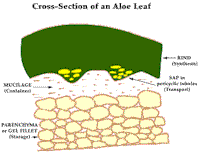
The
components of Aloe Vera can be divided into the following groups:
1.
Vitamins
It is
rich in all vitamins excluding Vitamin D, especially the antioxidant
Vitamins A (beta-carotene), C and E and even contains a trace of Vit.
B12, one of the very few plant sources of this vitamin. This is
important for vegetarians and vegans.
2.
Enzymes
Several
different types of these biochemical catalysts when taken orally aid
digestion by breaking down fat and sugars.
One in particular, Bradykinase, helps to reduce excessive inflammation
when applied to the skin topically and therefore reduces pain, whereas
others help digest any dead tissues in wounds. Lipases and proteases
which break down foods and aid digestion are present.
3.
Minerals
Calcium,
Sodium Potassium, Manganese, Magnesium, Copper, Zinc, Chromium and the
anti-oxidant Selenium.
Although minerals and trace elements are only needed in very small
quantities, they are essential for the proper functioning of various
enzyme systems in different metabolic pathways.
4. Sugars
These are
derived from the mucilage layer of the plant which surrounds the inner
gel. and are known as mucopolysaccharides, which enhance the immune
system and help to detoxify. Aloe Vera contains both mono and
polysaccharides, but the most important are the long chain sugars
involving glucose and mannose or the gluco-mannans which I have already
referred to. These sugars are ingested whole from the gut, not broken
down like other sugars, and appear in the bloodstream in exactly the
same form. This process is known as pinocytosis. Once in the blood
stream they are able to exert their immuno-regulating effect. Some of
these polysaccharides are not absorbed but stick to certain cells lining
the gut and form a barrier preventing absorption of unwanted material so
helping to prevent a "leaking" gut syndrome. In topical preparations the
sugars are also the main moisturisers.
5.
Anthraquinones
There are
twelve of these Phenolic compounds which are found exclusively in the
plant sap. In small quantities, when they do not exert their purgative
effect, they aid absorption from the gastro-intestinal tract and have
anti-microbial and pain killing effects. In some commercial health
drinks, the anthraquinones are removed because of the fear of producing
abdominal pain or diarrhoea, but I feel that they are actually
beneficial in small amounts. The important ones, Aloin and Emodin, act
as painkillers. They also function as anti-bacterials and anti-virals.
6. Lignin
This in
itself is an inert substance but when included in topical preparations
it endows Aloe Vera with a singular penetrative effect so the other
ingredients are absorbed into the skin.
7.
Saponins
These
soapy substances form about 3% of the Aloe Vera gel and are capable of
cleansing, having antiseptic properties. These act powerfully as anti-microbials
against bacteria, viruses, fungi and yeasts.
8. Fatty
Acids
Cholesterol, Campesterol, b. Sisosterol and Lupeol.
These four plant steroids are important anti-inflammatory agents.
9.
Salicylic acid
An
aspirin-like compound possessing anti-inflammatory and anti-bacterial
properties.
10. Amino
Acids
The body
needs 22 amino acids – the gel provides 20 of these. More importantly,
it provides 7 out of the 8 essential amino acids which the body cannot
synthesise.
References
1. Collins, C.E., M.D. (1935), Vol 57 No. 6 June, The Radiological
Review and Chicago Medical Recorder. Aloe Vera as a Therapeutic Agent in
the Treatment of Roentgen and Radium Burns.
2. Collins, C.E. and Collins, C. (1935), Roentgen Dermatitis Treated
with Fresh Whole Leaf of Aloe Vera. American Journal of Roentgenology
33, 396-397.
3. Wright, C.S. (1936), Aloe Vera in the Treatment of Roentgen Ulcers
and Telangiectasis. Journal of the American Medical Association 106,
1363-1364.
4. Loveman, A.B. (1937), Leaf of Aloe Vera in Treatment of Roentgen Ray
Ulcers. Archives of Dermatology and Sphilology 36, 838-843.
5. Cutak, L. (1937), Aloe Vera as a Remedy for Burns. Missouri Botanical
Garden Bulletin 25, 169-174.
6. Mandeville, F.B. (1939), Aloe Vera in the Treatment of Radiation
Ulcers of Mucous Membranes. Radiology 32, 598-599.
7. Crewe, J.E. (1939), Aloes in the Treatment of Burns and Scalds.
Minnesota Medicine 22, 538-539.
8. Rowe, T.D. (1940), Effect of Fresh Aloe Vera Jelly in the Treatment
of Third-Degree Roentgen Reactions on White Rats. Journal of the
American Pharmaceutical Association 29, 348-350.
9. Rowe, T.D., Lovell, B.K. and Parks, L.M. (1941), Further Observations
on the Use of Aloe Vera Leaf in the Treatment of Third-Degree X-Ray
Reactions. Journal of the American Pharmaceutical Association 30,
266-269.
10. Danhof, I.E., McAnally, B.H. (1983), Stabilized Aloe Vera: Effect on
Human Skin Cells. Drug. Cosmet. Ind. 133, 52-106
11. Winters, W.D., Benavides, R., Clouse, W.J. (1981), Effects of Aloe
Extracts on Human Normal and Tumor Cells In Vitro. Eco. Bot. 35: 89-95.
12. Blitz, J.J., Smith, J.W. and Gerard, J.R. (1963), Aloe Vera Gel in
Peptic Ulcer Therapy: Preliminary Report. Journal of the American
Osteopathic Association 62: 731-735.
13. Bland, J. Ph.D. (1985), Linus Pauling Institute of Science and
Medicine, Palo Alto, C.A., Prevention Magazine, Effect of Orally
Consumed Aloe Vera Juice in Gastrointestinal Function in Normal Humans.
The above
first appeared in Positive Health issue 20 June/July 1997 and was 1 of 4
articles about Aloe Vera in that issue.
|